Setting Up a Hyperbaric Oxygen Room: Safety, Space and Oxygen Supply
Chambers are a facility project. Here is a checklist for space, power, ventilation, oxygen handling, emergency planning and staff training before your chamber arrives.
- Plan the room around the chamber, the oxygen generator, the compressor and a clear access path.
- Keep ignition sources and flammable materials out of the room. Oxygen-enriched air changes how things burn.
- Write an emergency plan, test the safety devices and train every operator.
- Confirm regulations and insurance before installation, not after.

Illustration of a facility floor plan next to a large safety shield with a check mark
Regulations and insurance first
Before you sign anything, confirm what your local authority requires for installing and operating a hyperbaric chamber, and tell your insurer what you plan to do. Rules differ by country and by setting (wellness centre vs clinic), and getting this wrong is expensive.
Our pillar article, the hyperbaric chamber guide, explains why we ask every buyer to do this up front.
Space, power and ventilation
Work out the full footprint, not just the cabin. For example, the Oxa Cube Solo cabin measures 1,900 × 900 × 1,950 mm, and its separate oxygen generator is about 450 × 520 × 870 mm and weighs around 75 kg. You also need room for the compressor, service access and a safe entry and exit path.
The systems run on 220 V / 50 Hz (110–120 V / 60 Hz is also listed). Have a qualified electrician plan the circuit, and make sure the room is well ventilated. Operating limits for temperature and humidity are in the spec sheet.
Check floor loading, door width and lift access. Modular cabins are easier to bring in, but the generator and compressor are still heavy.
Oxygen and fire safety
Oxygen-enriched air makes materials burn faster and hotter. The golden rules are simple: keep ignition sources away, no open flames, no unsuitable electronics, and follow the supplied guidance on what can enter the cabin. Display clear signage, and train staff to brief every client.
Install appropriate fire detection and extinguishers as your regulations require, and keep service access to the generator clear.
People and procedures
Every session needs a trained operator following a written protocol: pre-session checks, a suitability screen for each client, a controlled pressurisation and a controlled release. Test the manual relief valve, emergency switch, automatic safety valve and intercom before every session.
Write an emergency plan, rehearse it with your team and keep records of maintenance and sessions. Our guide to installation, warranty and after-sales support describes how to get these set up with your supplier.
Designing the client flow
A safe room is also a calm room. Plan a short, clear journey: reception, screening, briefing, a small waiting area, the chamber room and a place to rest afterwards. Keep the corridor clear and the signage simple.
Offer lockers or a clear place to store anything that should not enter the cabin, and brief every client on what that includes. A consistent, friendly routine helps everyone feel at ease and reduces mistakes.
A pre-installation checklist
Work through the list with your supplier. The single vs double vs portable guide helps you match the chamber to the room.
A daily safety routine
Before the first client: inspect the cabin, door seals, valves, emergency switch and intercom. Before each session: confirm the client's screening, brief them, check their clothing and items brought into the cabin. After each session: log the details, wipe surfaces and note any issues.
Keep maintenance records and arrange periodic professional servicing. If you also run heat or cold facilities, such as an infrared sauna, keep a consistent hygiene and logging system across the whole space.
Laminate a one-page emergency procedure and fix it beside the chamber and at reception. Review it with the whole team every quarter.
Fitting it into your business
A chamber works best inside a thought-out wellness menu, with clear client screening, an honest service description and complementary offerings such as infrared or compression. For layout and economics, read how to start a recovery lounge.
If you would like help with planning, ask our team through the Live Well and Recover & Restore solutions pages.
Frequently asked questions
What room does a hyperbaric chamber need?
A well-ventilated room with space for the cabin, generator and compressor, a dedicated electrical supply, service access and a clear exit. Exact needs depend on the model.
Can a hyperbaric chamber be installed at home?
Local regulations and the supplied requirements apply, and a trained operator and medical suitability check are required. We recommend discussing your situation with us and your local authority first.
What power supply do the chambers need?
The listed supply is 220 V / 50 Hz, with 110–120 V / 60 Hz also noted. A qualified electrician should plan the circuit.
Who should be present during a session?
A trained operator, following the supplied procedures and your local regulations, should supervise sessions via the control panel and intercom.
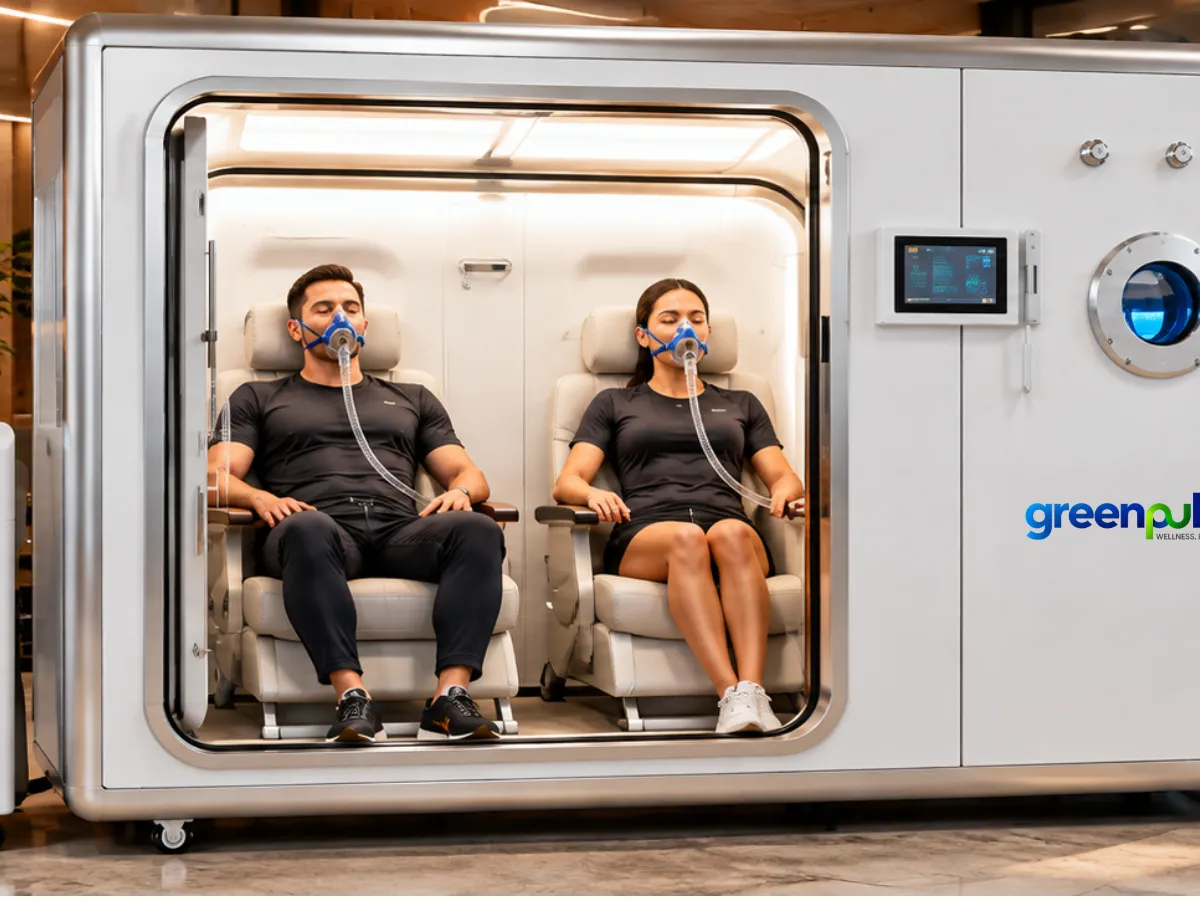
Oxa Cube Duo Hyperbaric Oxygen Chamber (HBOT, Double)
Two-user chamber; plan for its separate 15 L/min oxygen generator.
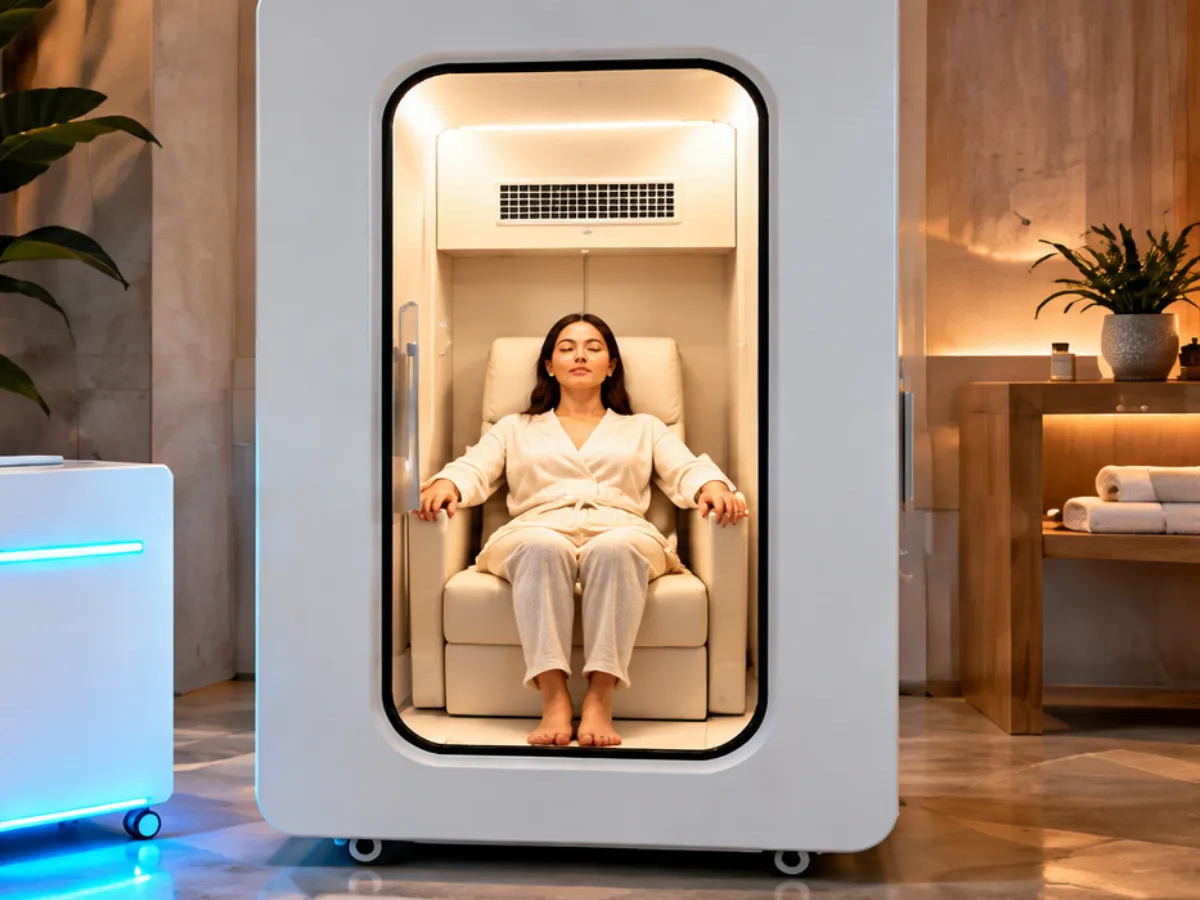
Oxa Cube Solo Hyperbaric Oxygen Chamber (HBOT, Single)
Single-user chamber with 10 L/min oxygen generator.
Planning a recovery suite or commercial wellness facility?
GreenPulse provides space layout planning, product selection, electrical planning, installation and team training for your space.
Related Perspectives
Hyperbaric Oxygen Chambers for Wellness Centres: A Straight-Talking Guide
What an HBOT chamber is, how the equipment works, what regulation and training involve, and how to decide whether it belongs in your wellness centre. No hype, just facts.

Single, Double or Portable HBOT Chamber? How to Pick
Solo, Duo, Mini, Oxy 1 and Oxy 2: what the dimensions, capacity and oxygen flow mean for your space, your bookings and your team.

Buying Wellness Equipment: Installation, Warranty and Support
What to ask before buying wellness equipment for a business: total cost, installation, training, spare parts and who picks up the phone when something needs attention.