Full-Spectrum vs Carbon vs Ceramic Infrared Heaters: Which Is Better?
Carbon panels, ceramic tubes, full-spectrum quartz. Each heats differently, feels different and suits a different user. Here is how to choose without needing an engineering degree.
- Carbon panels give a gentle, even, wide-area warmth and are popular for long, relaxing sessions.
- Ceramic tubes heat up faster and feel more intense, a good match for people who like a stronger heat.
- Full-spectrum setups add near-infrared to far-infrared in one cabin.
- A hybrid cabin combines carbon and ceramic so two people can enjoy the same session differently.

Illustration comparing a carbon heater panel with glowing ceramic heater tubes
Why the heater matters more than the cabin shell
Two infrared saunas can look identical from the outside and feel completely different inside. The difference is the heater. It decides how fast the cabin warms up, how the heat feels on your skin and how even it is from head to toe.
If you have not read it yet, our explainer on how infrared saunas work covers the basics of wavelengths. This article is the practical follow-up: which technology should you actually buy?
Carbon panels: gentle and even
Carbon heaters are large, flat panels that spread low-intensity warmth over a wide area. There is no single hot spot. The heat feels broad and soft, which is why they are loved for long, slow evening sessions.
They suit people who find intense heat uncomfortable, sit for longer sessions or want a calm, meditative experience. The trade-off is that the cabin can take a little longer to feel properly warm.
Ceramic tubes: quick and punchy
Ceramic heaters are the glowing tubes you often see in the corners of a cabin. They get hot fast and project a more concentrated heat. If you like to step in and feel it straight away, ceramic delivers.
The flip side is that the warmth is less uniform, and some users find it too intense at close range. Good cabin design places them so you are not sitting right next to one.
Full-spectrum and hybrid: the best of both?
Full-spectrum cabins use quartz-style heaters to add near-infrared alongside the far-infrared. Our Halo 2 and Halo 3 take this approach, which many users describe as a brighter, more enveloping warmth.
Hybrid cabins take a different route: carbon panels for wide, gentle coverage plus ceramic heaters for faster, stronger heat. The Halo Hybrid 2 (two people) and Halo Hybrid 3 (three people) are built this way, which is handy when users have different heat preferences.
Not sure which you will like? If possible, sit in a cabin before buying. If you cannot, choose a hybrid or full-spectrum model, which gives you more range to adjust the feel.
Heater layout and how it feels in practice
Specs only tell part of the story. Where the heaters sit and how many there are decides whether your back, legs and chest get an even share of warmth. Good cabins place heaters around the body and keep hot surfaces out of reach.
When you try a cabin, check three things: is the warmth even, can you adjust it, and is any heater so close that it feels harsh? A well-designed cabin should feel the same whether you sit at one end of the bench or the other.
Wood and glass matter here too. Light-coloured wood reflects warmth gently, and a well-sealed glass door keeps heat in. The Halo Hybrid 2 pairs ceramic tube heaters with carbon panels in red cedar, while the Halo 2 uses full-spectrum heating with hemlock or red cedar options.
Matching the heater to the place
Planning a space? Combine this with our size and power guide and the layout advice in how to start a recovery lounge.
If you are buying for a business, ask how heater replacement works. Modular panels that a technician can swap in minutes keep the room earning.
A quick chooser
Next, size and power. Our planning guide covers both, and the complete buying guide ties it all together. If you are curious about using heat alongside other tools, see how studios build a recovery stack.
Frequently asked questions
Which infrared heater is best for beginners?
Carbon-led or full-spectrum cabins tend to feel gentlest, because the warmth is broad and even. If you like stronger heat, a hybrid with ceramic heaters gives you more punch.
What does 'full-spectrum' mean on an infrared sauna?
It means the cabin is designed to emit more than one infrared band, typically near- and far-infrared together, rather than only far-infrared.
Are ceramic heaters safe?
Properly designed cabins position and guard ceramic heaters so they are not touched during normal use. Follow the manual, never cover the heaters and check the certification documents for your model.
Can two people with different heat preferences share a cabin?
Yes. A hybrid cabin such as the Halo Hybrid 2 or 3 combines carbon and ceramic heating, so the cabin can be set to a comfortable middle ground and people can sit nearer or further from the stronger heat.
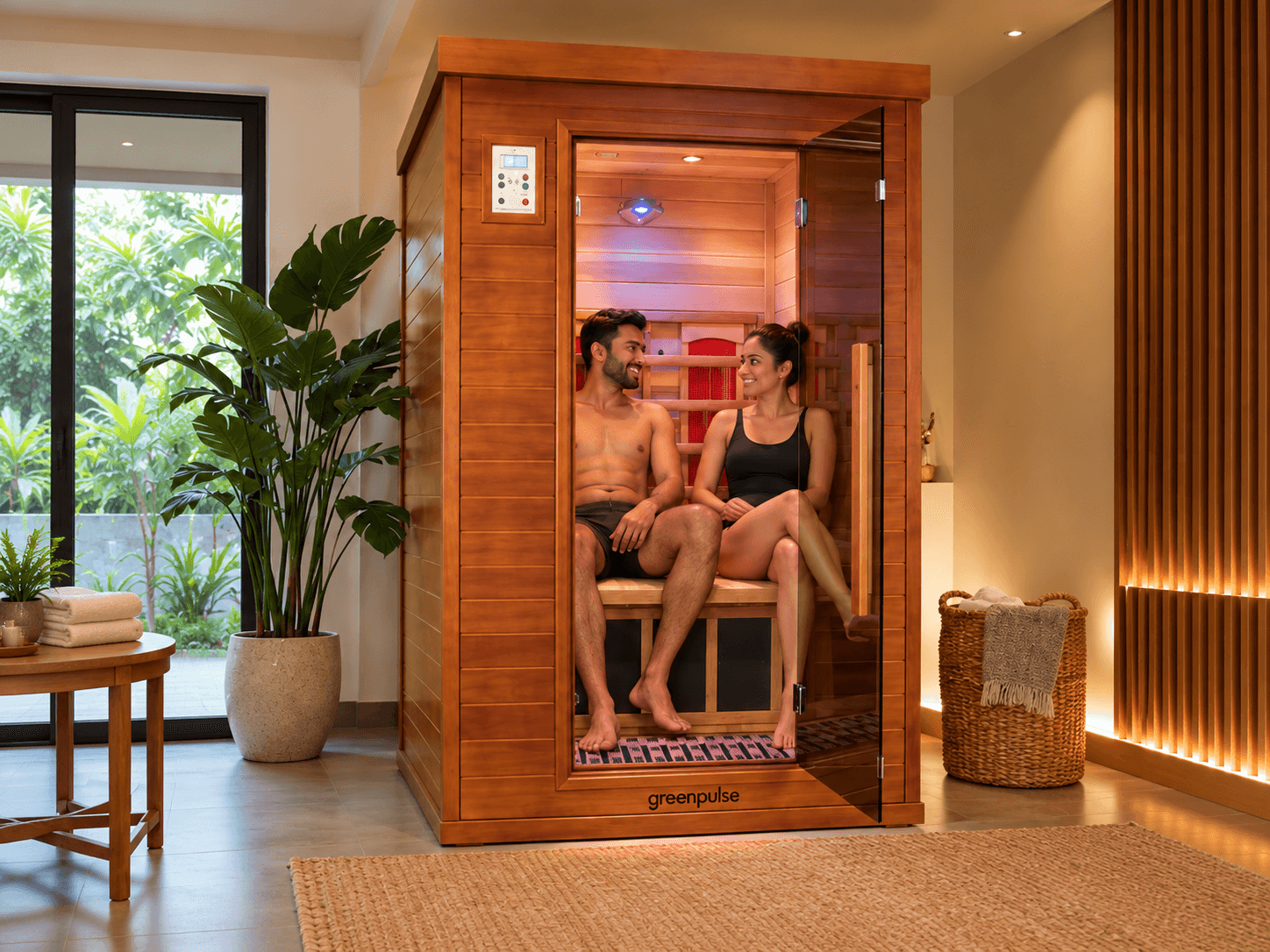
Halo Hybrid 2 Infrared Sauna (2 Person, Carbon + Ceramic Heater)
Carbon panels plus ceramic heaters in a two-person red cedar cabin.
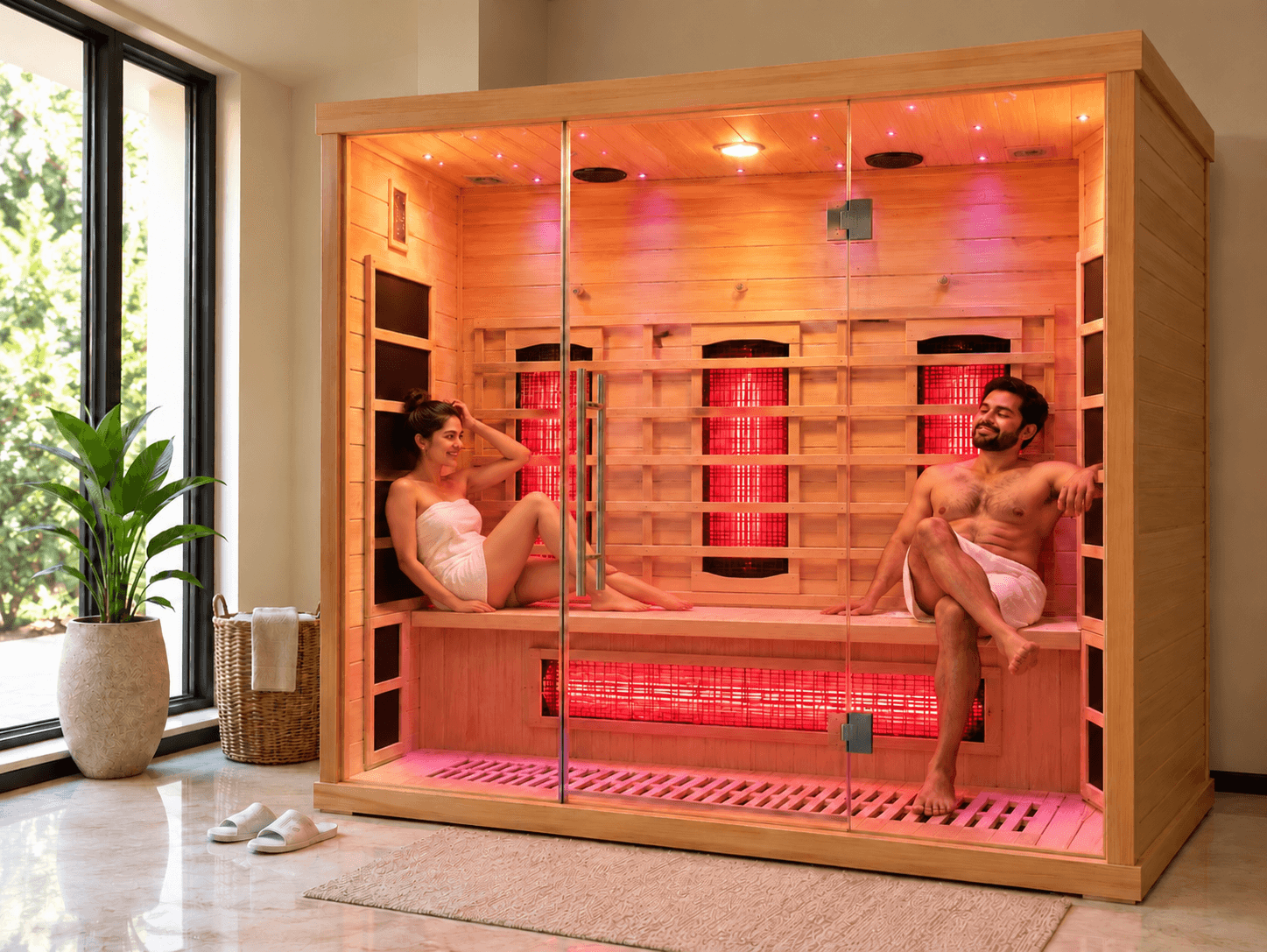
Halo 3 Infrared Sauna (3 Person, Full Spectrum)
Full-spectrum quartz heating for up to three people.
Planning a recovery suite or commercial wellness facility?
GreenPulse provides space layout planning, product selection, electrical planning, installation and team training for your space.
Related Perspectives

Infrared Sauna Buying Guide: How to Choose the Right One (2026)
Thinking about an infrared sauna for your home, studio or spa? Here is a plain-English guide to sizes, heater types, wood, power and the questions worth asking before you pay.

How Infrared Saunas Actually Work: Near, Mid and Far Infrared Explained
No jargon, promise. Here is how infrared heat differs from a steam sauna, what near, mid and far infrared mean, and why the air in the cabin stays much cooler than you would expect.

Infrared Sauna Size, Power and Installation: A Practical Planning Guide
How much space does an infrared sauna need, what electrical supply does it draw, and what should be ready before delivery day? A checklist for homes, studios and spas.