Red vs Near-Infrared Light: What the Wavelengths Do
660 nm, 810 nm, 850 nm. Why do red light devices list numbers like these, and what does each wavelength mean for how a session feels? A beginner-friendly explainer.
- Red light (around 630–670 nm) is visible; near-infrared (around 800–880 nm) is invisible.
- Near-infrared passes deeper into tissue than red, so many devices combine both.
- A nanometre figure on a spec sheet is useful only if the maker also states power and distance.
- This is a wellness explainer. It is not medical advice.
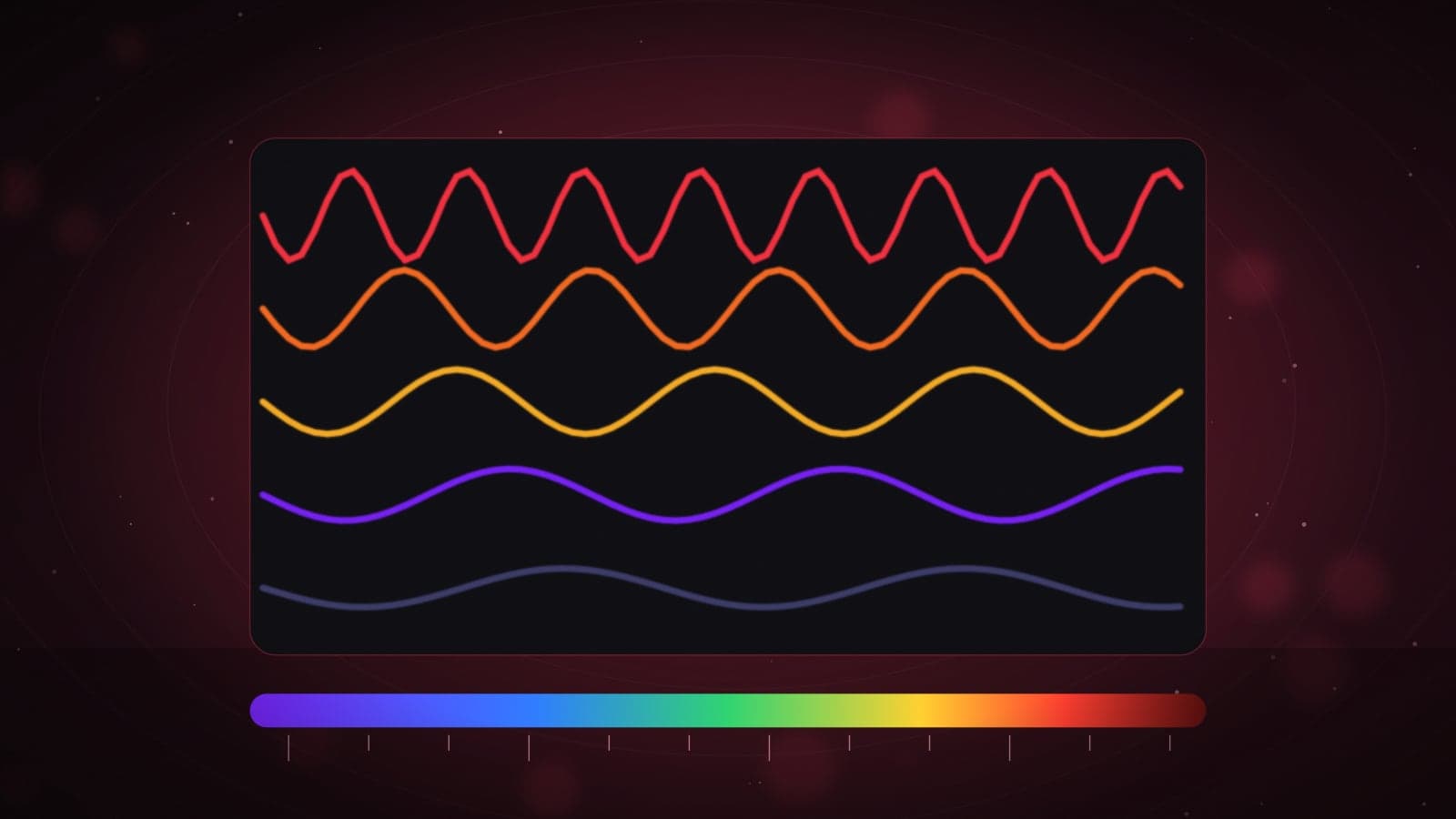
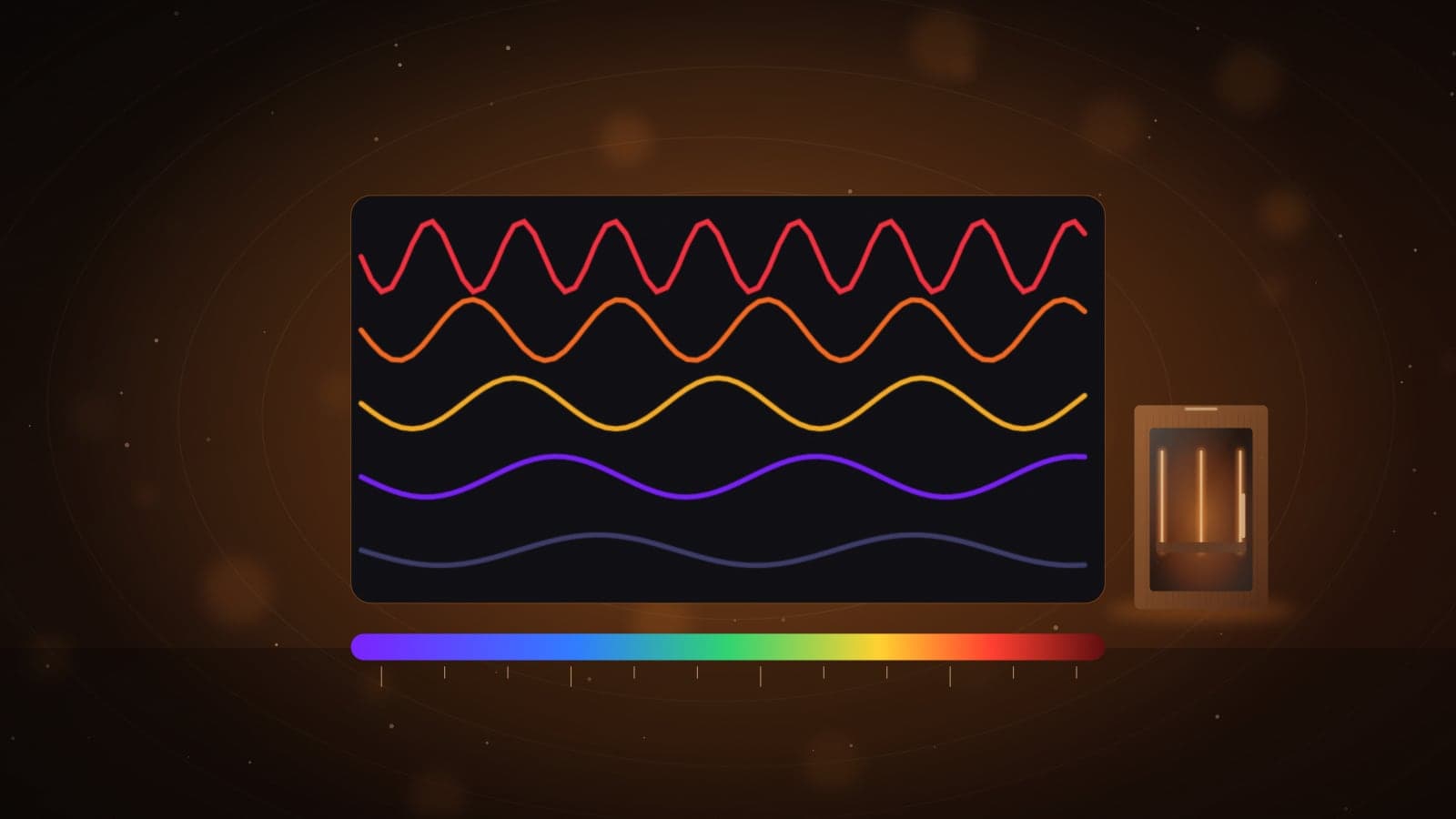
Illustration of coloured light wave curves above a spectrum bar
What 'nm' means
Light is a wave, and a nanometre (nm) is how we measure the distance between its peaks. Different wavelengths give different colours (and invisible colours, too). Red sits at roughly 620–700 nm. Beyond that, past the edge of what your eyes can see, is near-infrared.
Why does that matter? Because light of different wavelengths interacts with the body differently, so devices often combine a few of them.
Red light: around 660 nm
Red light is visible, bright and absorbed mostly in the outer layers of the skin. It is the headline wavelength in many panels, masks and wearables. Our Aurora Wrap uses 660 nm red alongside 850 nm near-infrared, and the Luma Go 500 stand does the same.
Near-infrared: around 810–850 nm
Near-infrared is invisible to the eye, but you may feel a gentle warmth. It travels further into tissue than red, which is why devices built for the body, not just the face, usually include it. The Luma Beam Quad pairs a 650 nm red laser with an 808 nm infrared laser, and the Luma Beam Wand has 650 nm and 808 nm diodes in one handheld.
In the research literature, red and near-infrared light are described as acting on cellular components such as mitochondria. Results vary between studies and devices, so treat claims with healthy scepticism and look for transparent specs.
How is this different from an infrared sauna?
Infrared saunas use infrared as a heat source, often far-infrared, which is felt as warmth. Light panels use red and near-infrared at low power mainly for the light itself. There is overlap at the near-infrared end, which is why full-spectrum cabins exist. We explain this in how infrared saunas work.
A spec-sheet checklist
Before you buy any light device, run through this list:
If the answers are clear, you are probably dealing with a serious supplier.
What about the other colours?
Some devices add blue, green, yellow or white light. These sit in the visible spectrum and are usually marketed for skincare-style routines. For example, the Luma Shell 2 lists wavelengths from 390 to 630 nm plus white light across seven modes, and the Luma Mask Duo offers seven colour modes.
If you are comparing masks, our LED face mask guide explains how to weigh colour modes against fit and comfort. If you are comparing body devices, see bed vs panel vs stand.
Pulsing, power and dose
Wavelength is only one dial. Power (how intense the light is), distance (how far you sit) and time (how long you stay) together make up the dose. Some devices also pulse the light at set frequencies, like the 10 Hz and 40 Hz modes on the Luma Panel.
Too much is not necessarily better. Follow the supplied guidance and keep notes on what you use. Handheld lasers behave differently from LED panels because their light is concentrated, so read the safety guidance in our handheld guide.
A device's wavelength tells you the 'colour' of the light. Its irradiance (power per area), the distance you sit and the session time determine how much light energy you actually receive.
Sauna, light or both?
Some people ask whether an infrared sauna can replace a light panel. They overlap but are not the same: saunas are designed for heat, panels for light. Many users enjoy both. See how infrared saunas work and our red light guide for the differences.
Reading a spec sheet in practice
Check four things: wavelengths, LED count, total power and the recommended distance and session time. If a seller lists only vague 'full spectrum' marketing with no numbers, ask for details.
Once you know what you want, move on to choosing a format or the complete red light guide.
Frequently asked questions
Which is better, 660 nm or 850 nm?
Neither is 'better'. They are different tools: red (around 660 nm) is absorbed nearer the surface while near-infrared (around 850 nm) travels further, so many devices combine both.
Can I see near-infrared light?
Not clearly. Near-infrared is just beyond visible red, so some LEDs look dim or show only a faint glow even when they are on.
Do I need pulsing modes?
Not necessarily. Pulsing modes are an extra. Choose them if you will use them, and otherwise prioritise power, coverage and build quality.
What does 'nm' stand for?
Nanometre, one billionth of a metre. It measures the wavelength of light, which determines its colour and how it interacts with the body.
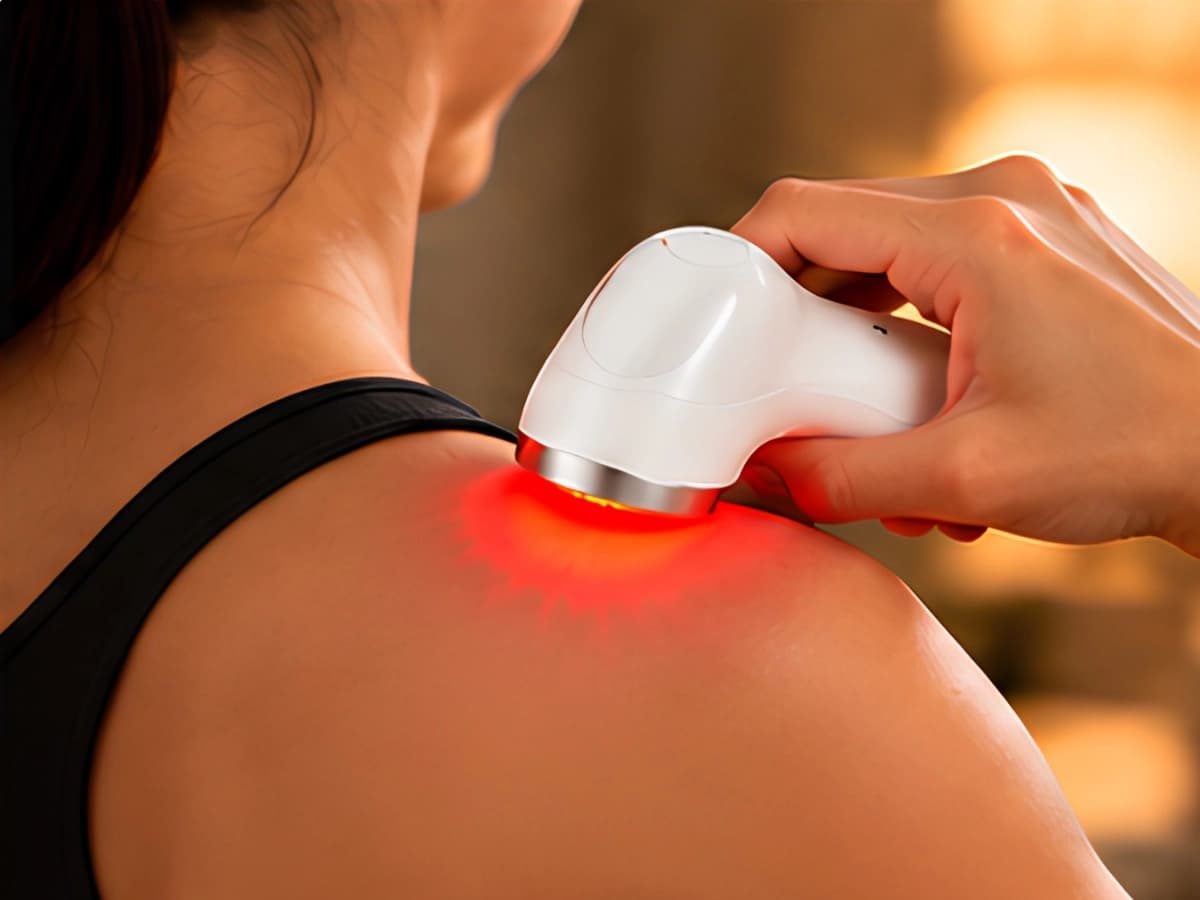
Luma Beam Wand Handheld Red & Infrared Laser Device
Handheld wand with 650 nm and 808 nm diodes.
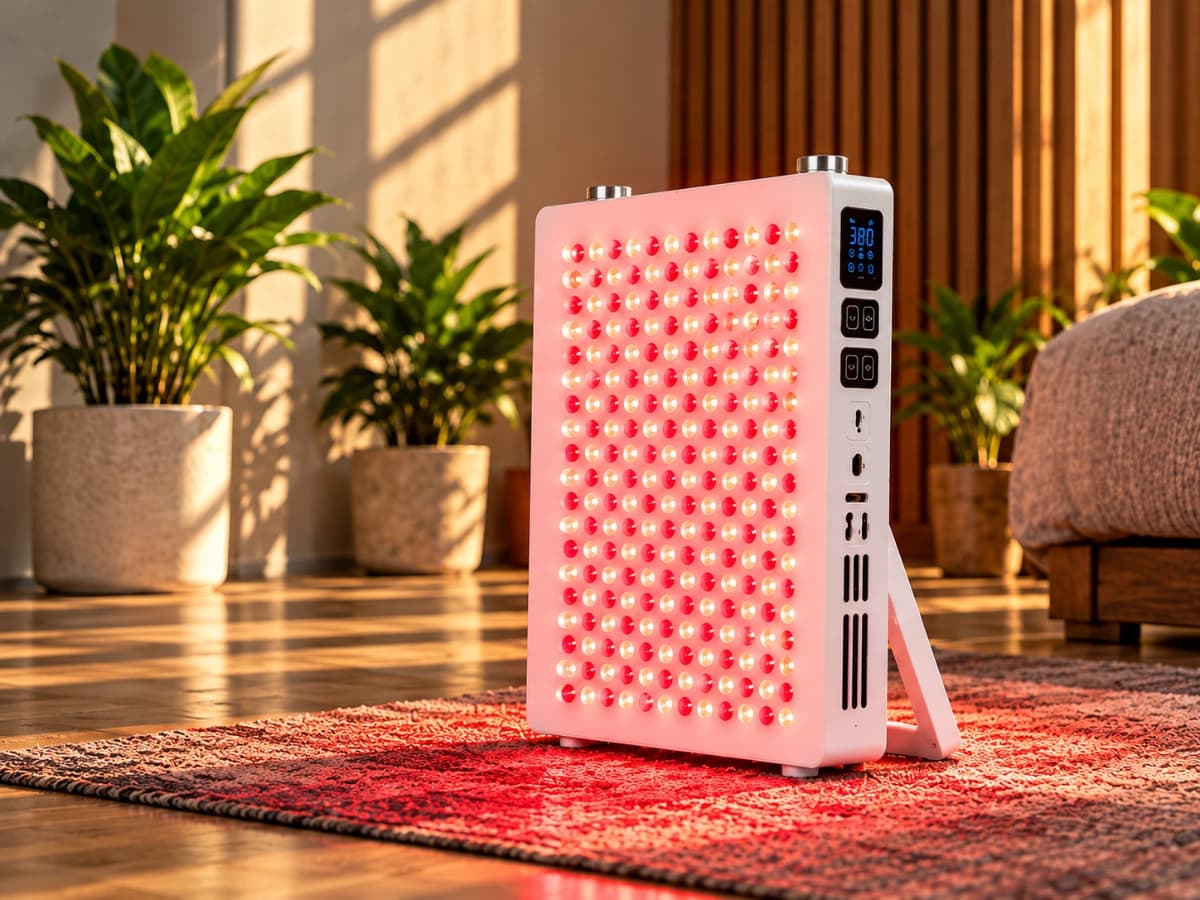
Luma Go 500 Portable Red Light Therapy Stand
Portable stand with 660 nm and 850 nm LEDs.
Planning a recovery suite or commercial wellness facility?
GreenPulse provides space layout planning, product selection, electrical planning, installation and team training for your space.
Related Perspectives
Red Light Therapy: A Plain-English Guide for Homes, Studios and Clinics
What red light therapy is, how the main formats compare (masks, panels, stands, beds, handhelds) and how to choose the right one without wading through marketing claims.
How Infrared Saunas Actually Work: Near, Mid and Far Infrared Explained
No jargon, promise. Here is how infrared heat differs from a steam sauna, what near, mid and far infrared mean, and why the air in the cabin stays much cooler than you would expect.
LED Face Masks: How to Choose One (and Use It Properly)
Silicone or hard shell? Face only or face and neck? How many modes do you really need? A grounded guide to choosing an LED face mask and building a routine around it.